
Updated for mortgage applicants in Virginia, Florida, Tennessee, and Georgia — August 2026. Most lenders ask for the same stack of documents, then run a hard credit pull before you’ve even decided if you want to work with them. That single inquiry can cost you 5–10 points on your credit score and stays on your report for two years, according to the Consumer Financial Protection Bureau (CFPB). Before you hand over your Social Security number, it pays to know exactly what an online mortgage application and prequalification actually requires — and whether the lender you’re talking to needs to touch your credit at all.
To illustrate the real cost: imagine a borrower applying for a $350,000 conventional loan with a FICO score of 700. A lender runs a hard pull during prequalification, and the inquiry drops their score to 692. That eight-point drop moves them across a Fannie Mae Loan-Level Price Adjustment (LLPA) pricing tier. At even 0.125% higher, the additional interest paid over 30 years on a $350,000 loan can total several thousand dollars — triggered by a prequalification inquiry before the borrower ever chose a lender.
This guide breaks down the 9 essential document categories and tools every borrower needs ready, explains what each one is used for, and shows you how a soft pull mortgage pre-qualification works in practice. Duane Buziak’s NoTouch Credit Pull at FreePreQuals.com is a no hard inquiry mortgage pre-approval process that delivers a real prequalification letter with zero credit score impact — no FICO damage, no cost, no obligation. The NoTouch Credit Pull is available to borrowers in Virginia, Florida, Tennessee, and Georgia. Whether you’re a first-time buyer in Virginia or refinancing in Florida, having these items organized before you apply will save time, reduce stress, and protect your credit score with a soft pull pre-qualification.
By Duane Buziak, NMLS #1110647 | Coast2Coast Mortgage LLC, NMLS #376205 | Licensed in VA, FL, TN, GA, DC
This content is for informational purposes only and does not constitute a commitment to lend. Loan approval is subject to credit approval, income verification, and property eligibility. Programs and rates are subject to change without notice. A mortgage pre-qualification without a hard inquiry provides an estimate of borrowing capacity and is not a guarantee of financing.
1. FreePreQuals.com — NoTouch Credit Pull Pre-Qualification
Best for: Borrowers who want a real pre-qualification letter with zero credit score impact.
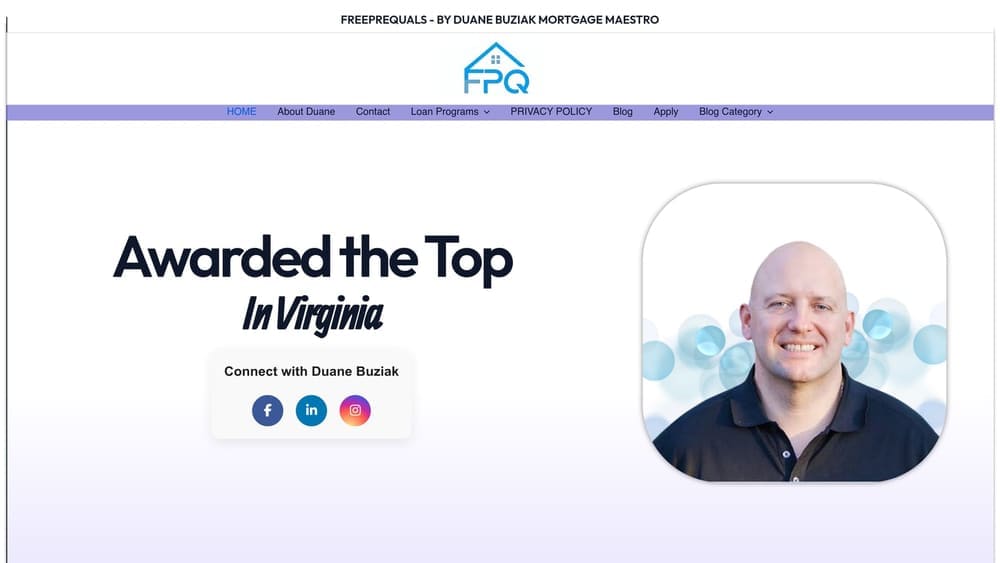
FreePreQuals.com is the only platform in this guide that pre-qualifies borrowers using a soft pull only, with no FICO score damage whatsoever.
Where This Tool Shines
The standard industry practice is to run a hard credit inquiry the moment you express interest in a mortgage. FreePreQuals.com flips that model entirely. Through the NoTouch Credit Pull process, Duane Buziak reviews your financial profile using a soft pull — the same type of inquiry used when you check your own credit — meaning your score stays exactly where it is while you explore your options.
Because Duane operates as a mortgage broker under Coast2Coast Mortgage LLC rather than a single bank, he has access to over 500 wholesale lenders. That means your pre-qualification isn’t limited to one institution’s programs or rate sheet. You get a real pre-qualification letter, backed by broker-level market access, without paying a cent or risking a single credit score point.
Key Features
NoTouch Credit Pull: Soft pull only — zero FICO score impact at the pre-qualification stage, period.
Free Pre-Qualification Letter: No cost to the borrower at any point in the pre-qualification process.
Broker Access to Multiple Wholesale Lenders: Not locked into one bank’s products — Duane shops across a network of wholesale lenders to find the right fit for your profile.
Full Loan Program Menu: FHA, VA, USDA, Conventional, and Jumbo loan programs are all available, covering purchase and refinance scenarios.
Award-Winning Expertise: Duane Buziak is a two-time Scotsman Guide Top Originator (2025 and 2026), Virginia Broker of the Year 2024–2025, and has earned 1,400+ five-star reviews from borrowers across his licensed states.
Best For
Any borrower who is credit-conscious, actively shopping lenders, or simply not ready to commit to a single lender. Particularly valuable for first-time buyers in Virginia, veterans exploring VA loan eligibility in Tennessee or Georgia, and self-employed borrowers in Florida or DC who want to understand their options before triggering a hard inquiry anywhere.
Pricing
Free — no cost to pre-qualify. Call 804-212-8663 or start online at FreePreQuals.com. Licensed in VA, FL, TN, GA, and DC.
2. Government-Issued Photo ID
Best for: Satisfying federal identity verification requirements at every lender.
USA.gov provides a clear overview of accepted government-issued identification documents required for financial applications.
Where This Tool Shines
Your photo ID is the foundation of every mortgage application. Under federal Know Your Customer (KYC) regulations, every lender — online or in person — must verify your identity before processing any loan request. This isn’t optional, and no lender can skip it.
The good news is that most online mortgage platforms accept high-quality digital scans or photos of your ID. What matters most is that the name on your ID matches every other document you submit. Even a minor discrepancy — a middle name on one form and not another — can create delays.
Key Features
Accepted Documents: Driver’s license (front and back), U.S. passport, or state-issued ID card are all standard.
Expiration Matters: Your ID must be current and unexpired at the time of application — an expired license will not be accepted.
Name Consistency: The name on your ID must match your application, income documents, and all other submitted materials exactly.
Digital Submission: Most online platforms accept scanned copies or clear smartphone photos — physical originals are rarely required at the pre-qualification stage.
Best For
Every borrower, without exception. This is a universal requirement across FHA, VA, USDA, Conventional, and Jumbo loan programs. Have both sides of your driver’s license ready to upload before you begin any online application.
Pricing
N/A — government-issued document. Replacement costs vary by state if yours is lost or expired.
3. Social Security Number (SSN) or ITIN
Best for: Identity verification and credit file access — with an important caveat about who controls the pull type.
The Social Security Administration provides guidance on SSN use and protection for financial purposes.
Where This Tool Shines
Here’s something most borrowers don’t realize: your Social Security Number itself does not cause a hard credit pull. The lender’s internal policy determines whether they run a hard inquiry or a soft pull when they access your credit file. Providing your SSN to a lender who uses a no hard inquiry mortgage pre-approval process — like the NoTouch Credit Pull at FreePreQuals.com — results in zero score impact.
For non-citizen borrowers without a Social Security Number, an Individual Taxpayer Identification Number (ITIN) may be accepted on certain loan programs. ITIN lending is a specialized area — not every lender offers it — but it does exist and is worth exploring if it applies to your situation.
Key Features
Standard Requirement: SSN is required for FHA, VA, USDA, and conventional loan applications across all lenders.
ITIN Alternative: Accepted by select lenders on certain non-QM and portfolio loan programs for eligible non-citizen borrowers.
Pull Type Is the Lender’s Choice: Providing your SSN does not automatically trigger a hard pull — that decision belongs entirely to the lender.
Protect Your SSN: Only share it with verified, NMLS-licensed mortgage professionals. Always confirm the lender’s NMLS number before submitting.
Best For
All borrowers. If you’re working with a lender who claims they “have to” run a hard pull just to pre-qualify you, understand that this is a policy choice — not a legal requirement. You have the right to ask about soft pull options first.
Pricing
N/A — personal identification number. SSN replacement through the Social Security Administration is free.
4. Proof of Income Documents
Best for: Demonstrating repayment ability to satisfy underwriting requirements across all loan programs.
The IRS provides W-2 form guidance for employees verifying their annual income for financial applications.
Where This Tool Shines
Income documentation is the core of every mortgage underwriting decision. Lenders need to confirm that your income is real, consistent, and sufficient to support the proposed mortgage payment. The specific documents required depend on how you earn your income.
For pre-qualification specifically — particularly with a soft pull mortgage pre-qualification process — income is often self-reported at the initial stage. Full document verification happens later, at formal application. This means you can get a pre-qualification letter based on what you tell the broker, with document collection following once you’ve chosen a lender and a property.
Key Features
W-2 Employees: Last two years of W-2 forms plus 30 days of recent pay stubs are the standard requirement.
Self-Employed Borrowers: Last two years of federal tax returns (all schedules) plus a year-to-date profit and loss statement are required.
Social Security or Pension Income: Award letters and 1099-SSA forms document non-employment income sources.
Rental Income: Schedule E from your federal tax returns, combined with current lease agreements, is used to document rental income.
Best For
Every borrower applying for any loan program. Self-employed borrowers should prepare their two most recent tax returns well in advance — incomplete returns or unfiled years are among the most common causes of application delays.
Pricing
N/A — personal financial documents. Copies of prior-year tax returns can be requested from the IRS for free using Form 4506-C.
5. Employment Verification
Best for: Confirming two-year income stability required by FHA, VA, USDA, and conventional underwriting guidelines.
The CFPB’s mortgage application guide outlines what lenders review when evaluating employment history.

Where This Tool Shines
A consistent two-year employment history is one of the most fundamental requirements in mortgage underwriting. It tells lenders that your income isn’t temporary or speculative. For most borrowers, this documentation comes naturally from their W-2s and pay stubs — but the details matter.
Gaps in employment of 30 days or more typically require a written letter of explanation. Recent job changes aren’t automatically disqualifying — especially if you moved to a higher-paying position in the same field. What lenders are really looking for is income stability and trajectory, not rigid job tenure.
Key Features
Two-Year History Required: Standard across FHA, VA, USDA, and conventional loan programs — gaps and changes must be documented.
Employer Details Needed: Employer name, address, phone number, and your dates of employment are all part of the standard application.
Job Changes Can Be Acceptable: Moving to a new employer in the same field, or to a higher-income position, is generally acceptable with proper documentation.
Gaps Require Explanation: Any employment gap of 30 or more days will require a signed letter of explanation describing the circumstances.
Best For
All borrowers, but especially those who have recently changed jobs, returned to work after a gap, or transitioned from W-2 employment to self-employment. Discussing your employment history with a broker before applying helps identify potential issues early.
Pricing
N/A — employment history documentation. Verification of Employment (VOE) forms are typically handled between lenders and employers at no cost to the borrower.
6. Bank Statements and Asset Documentation
Best for: Verifying that funds for your down payment, closing costs, and reserves are available and properly sourced.
The FDIC’s consumer resources page provides guidance on financial documentation and account verification for lending purposes.

Where This Tool Shines
Having income is one thing — having the funds to close is another. Lenders require asset documentation to confirm that your down payment and closing costs are real, available, and come from acceptable sources. This is where many borrowers are caught off guard.
Large or unusual deposits in your bank statements will raise questions. If a significant sum appeared in your account recently, you’ll need to document where it came from. This isn’t punitive — it’s a standard anti-fraud and anti-money-laundering requirement. Planning ahead and keeping your accounts clean for 60–90 days before applying makes this process much smoother.
Key Features
Statement Period: Last two to three months of statements for all checking, savings, and investment accounts being used toward the transaction.
Large Deposit Sourcing: Deposits that are large relative to your income (typically more than 50% of monthly income) require documentation of their origin.
Gift Funds: Money gifted by a family member toward your down payment requires a signed gift letter from the donor confirming it is not a loan.
Retirement Accounts: 401(k), IRA, and similar accounts may be counted as reserves, often with documentation of vesting terms and applicable withdrawal penalties.
Best For
All borrowers, particularly first-time buyers receiving gift funds from family, and anyone who has recently received a bonus, inheritance, or proceeds from a sale. Getting these accounts in order before you start the pre-qualification process prevents delays later.
Pricing
N/A — personal financial documents. Most financial institutions provide digital bank statement downloads at no charge through online banking portals.
7. Credit Profile Awareness Tools (Soft Pull Self-Check)
Best for: Understanding your credit standing before any lender sees it — with zero score impact.
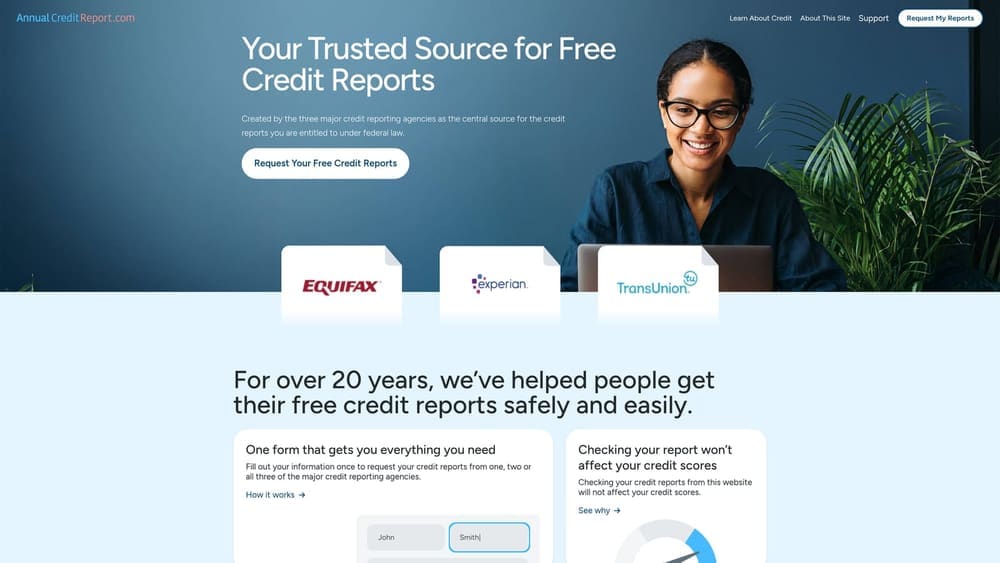
AnnualCreditReport.com is the only federally authorized source for free credit reports from all three major bureaus, endorsed by the CFPB.
Where This Tool Shines
Before you engage with any lender, you should know what’s in your credit file. AnnualCreditReport.com gives you free weekly access to your reports from Equifax, Experian, and TransUnion — and because you’re requesting your own report, it counts as a soft pull with zero credit score impact. This is a mortgage pre-approval without hard pull in its most basic form: you reviewing your own data.
This step is especially valuable because errors on credit reports are more common than most people expect. A collection account that was paid off, a balance reported incorrectly, or an account that doesn’t belong to you can all drag your score down unnecessarily. Catching these before a lender does gives you time to dispute and correct them.
Key Features
Free Weekly Reports: Full credit reports from all three bureaus available weekly at no cost — a permanent change implemented after the COVID-19 pandemic.
Zero Score Impact: Self-requested reports are soft pulls — they do not affect your FICO score in any way.
CFPB-Endorsed Source: AnnualCreditReport.com is the official, government-sanctioned source — other “free credit report” sites may charge fees or collect your data for marketing purposes.
Error Identification: Reviewing your reports before applying lets you dispute inaccuracies with the bureaus before a lender’s underwriter sees them.
Best For
Every borrower, without exception, before starting any mortgage application. Knowing your approximate FICO range helps you and your broker identify which loan programs you’re likely to qualify for and set realistic expectations before a single document is submitted.
Pricing
Free — federally mandated at AnnualCreditReport.com. No credit card required, no subscription, no hidden fees.
8. Property Information
Best for: Sizing the loan, determining program eligibility, and confirming conforming loan limit applicability.
The CFPB’s homebuying process guide explains how property details factor into loan program selection and eligibility.
Where This Tool Shines
Property information becomes relevant once you’ve identified a home — or if you’re refinancing a property you already own. For early-stage pre-qualification, before you’ve found a specific home, this information is not required. You can receive a legitimate no credit impact mortgage pre-qual based entirely on your financial profile, with property details added later.
When you do have a property in mind, the details matter for program eligibility. A two-unit property has different LTV limits than a single-family home. An investment property carries different rate pricing than a primary residence. And the 2026 conforming loan limits — $806,500 for standard areas and $1,249,125 for high-cost areas — determine whether your loan falls under conventional conforming guidelines or requires a jumbo program.
Key Features
Basic Property Details: Address, estimated purchase price (or current value for refinances), and property type are the starting point.
Property Types: Single-family home, condominium, townhome, and two-to-four-unit properties each have distinct underwriting requirements.
Occupancy Classification: Primary residence, second home, and investment property designations affect loan program eligibility, required down payment, and interest rate.
2026 Conforming Loan Limits: $806,500 for standard areas and $1,249,125 for designated high-cost areas — loans above these limits require jumbo financing.
Best For
Borrowers who have a specific property under contract or in serious consideration, and those refinancing an existing property. Early-stage buyers exploring purchasing power can skip this step initially and add property details once they’ve narrowed their search.
Pricing
N/A — property details are gathered from the purchase contract, listing, or county records. No cost to the borrower.
9. Debt Summary and Monthly Obligations
Best for: Calculating your debt-to-income ratio, which directly determines how much mortgage you qualify for.
The CFPB’s DTI explainer breaks down how debt-to-income ratios work and why they matter in mortgage underwriting.
Where This Tool Shines
Your debt-to-income ratio is arguably the most powerful number in mortgage underwriting after your credit score. It tells lenders what percentage of your gross monthly income is already committed to existing debt payments before you add a mortgage. The lower your DTI, the more purchasing power you have — and the more loan programs you qualify for.
Compiling a complete and accurate debt summary before you apply prevents surprises. Lenders will see every obligation on your credit report regardless, so being upfront and organized about your monthly payments gives your broker the full picture they need to find the right program for you.
Key Features
Monthly Debt Payments: All minimum required payments on car loans, student loans, and credit cards are included in your DTI calculation.
Court-Ordered Obligations: Child support and alimony payments are included in DTI if they appear in court documents and have more than a set number of months remaining.
Other Housing Payments: If you currently pay rent or carry another mortgage, that payment factors into your overall debt picture during underwriting.
Program-Specific DTI Limits: FHA allows higher DTI ratios with compensating factors. Conventional programs typically cap near 45–50%. VA loans have no hard DTI ceiling but 41% is a common guideline benchmark.
Best For
Every borrower, but particularly those with student loans, car payments, or other significant recurring obligations. Understanding your DTI before applying helps you and your broker determine whether paying down a specific debt before closing could meaningfully improve your loan options.
Pricing
N/A — personal financial information. No tools or subscriptions required to compile your own monthly debt summary.
The Real Cost of a Hard Pull: A Worked Dollar Example
Here’s why the hard pull vs. soft pull distinction isn’t just academic — it has a direct dollar value attached to it.
Consider a borrower applying for a $350,000 conventional loan with a FICO score of 700. A lender runs a hard pull during pre-qualification, and the inquiry drops their score to 692. That eight-point drop moves them from one FICO pricing tier to the next lower tier.
On a $350,000 loan, even a 0.125% difference in interest rate — which is a common spread between adjacent FICO tiers — adds up to meaningful money over time. At 0.125% higher, the additional interest paid over a 30-year loan term can total several thousand dollars, sometimes significantly more depending on the rate environment at the time of application.
That cost was triggered by a pre-qualification inquiry — before the borrower even chose a lender. The CFPB confirms that hard inquiries can reduce credit scores by five to ten points and remain on your credit report for two years. A no credit impact mortgage pre-qual process eliminates this risk entirely.
How FreePreQuals.com Compares to the Industry Standard
| Feature | FreePreQuals.com / NoTouch Credit Pull | Typical National Lender | Typical Bank |
|---|---|---|---|
| Credit Pull Type | Soft pull only | Hard pull standard | Hard pull standard |
| Score Impact | Zero | 5–10 points (CFPB) | 5–10 points (CFPB) |
| Time to Pre-Qual Letter | Fast, often same day | Varies | Varies, often slower |
| Lender Access | Broker — 500+ wholesale lenders | Single lender only | Single bank only |
| Cost to Pre-Qualify | Free | Often free but score impact | Often free but score impact |
| Loan Programs Available | FHA, VA, USDA, Conventional, Jumbo | Varies by lender | Varies, often limited |
| NMLS Licensed States | VA, FL, TN, GA, DC | National (varies) | Varies by charter |
| FICO Floor (FHA) | 580+ | Varies by lender overlay | Varies, often higher overlays |
Frequently Asked Questions
Q: What documents do I need to start an online mortgage pre-qualification?
A: At the pre-qualification stage, most brokers need your basic identity information (name, SSN or ITIN), self-reported income, a general sense of your monthly debts, and the approximate loan amount you’re seeking. Full documentation — W-2s, tax returns, bank statements — is typically collected after you’ve selected a lender and a property.
Q: Does getting pre-qualified for a mortgage hurt your credit score?
A: It depends entirely on the lender’s process. Most lenders run a hard pull during pre-qualification, which can reduce your FICO score by 5–10 points according to the CFPB. FreePreQuals.com uses the NoTouch Credit Pull — a soft pull only — which has zero impact on your credit score.
Q: What is the difference between a hard pull and a soft pull for mortgage pre-qualification?
A: A hard pull is a formal credit inquiry that appears on your credit report and can lower your score. A soft pull accesses your credit file for informational purposes without affecting your score. The lender’s internal policy — not the law — determines which type they use during pre-qualification.
Q: Can I get pre-qualified without providing my Social Security Number?
A: Your SSN (or ITIN) is required to verify your identity and access your credit profile. However, providing your SSN does not automatically trigger a hard pull. Whether a hard or soft pull is run depends on the lender’s process — not on the act of providing your SSN itself.
Q: What is a debt-to-income ratio and how does it affect my mortgage pre-qualification?
A: Your DTI ratio is the percentage of your gross monthly income that goes toward recurring debt payments. Lenders use it to determine how much additional mortgage payment you can support. FHA loans allow higher DTI ratios with compensating factors; conventional loans typically cap near 45–50%; VA loans have no hard DTI ceiling but use 41% as a common guideline.
Q: Do I need to have a specific property in mind to get pre-qualified?
A: No. Early-stage pre-qualification is based on your financial profile — income, credit, assets, and debts — not on a specific property. You can receive a legitimate pre-qualification letter before you’ve identified a home. Property details are added later when you’re ready to make an offer.
Q: What is the 2026 conforming loan limit and why does it matter?
A: The 2026 conforming loan limit is $806,500 for standard areas and $1,249,125 for designated high-cost areas. Loans at or below these limits qualify for conventional conforming programs with standard underwriting guidelines. Loans above these limits require jumbo financing, which carries different qualification criteria and rate pricing.
Q: How long does an online mortgage pre-qualification take?
A: With an organized document set and a broker using a soft pull process, pre-qualification can often be completed the same day. Hard-pull lenders may take longer due to additional verification steps. Having your income documents, ID, and debt summary ready before you start significantly speeds up the process regardless of which lender you choose.
Which Documents to Prioritize — and Where to Start
Getting pre-qualified online doesn’t have to mean handing your credit score over to a lender before you’re ready. The 9 document categories in this guide cover everything a legitimate mortgage pre-qualification requires: from your ID and income proof to your debt summary and asset statements.
Having these organized before you start saves time and prevents the back-and-forth delays that slow down most applications. More importantly, knowing that most lenders run a hard credit pull just to issue a pre-qualification letter means you can choose differently.
FreePreQuals.com’s NoTouch Credit Pull pre-qualifies borrowers using a soft pull only — zero credit score impact, zero cost, and a real pre-qualification letter you can use with confidence. Whether you’re buying your first home in Virginia, refinancing in Florida, or exploring VA loan options in Tennessee, the process starts with one free, no-risk conversation.
get your free mortgage prequalification today and discover exactly what you can afford — with no obligation and no cost. Or call Duane Buziak directly at 804-212-8663 to talk through your options with an award-winning mortgage broker who has helped thousands of borrowers across Virginia, Florida, Tennessee, Georgia, and Washington DC.
Duane Buziak, NMLS #1110647
Mortgage Maestro | Coast2Coast Mortgage LLC, NMLS #376205
Phone: 804-212-8663
Website: FreePreQuals.com
Licensed in: Virginia, Florida, Tennessee, Georgia, Washington DC