
Updated for 2026. Most lenders run a hard credit pull just to tell you what you qualify for. If your credit is already shaky, that inquiry can cost you points you can’t afford to lose. Here’s the part that makes it worse: the standard industry process punishes borrowers with lower credit scores twice. First, you get dinged for the hard pull. Then, if your score drops even a few points, you may no longer qualify for the loan tier you needed.
That cycle stops here.
Here’s a concrete example of what’s at stake. On a $250,000 FHA loan at a 30-year fixed term, a rate of 7.00% produces a principal-and-interest payment of approximately $1,663 per month. At 7.25% — a shift that can result from just a few lost FICO points — that payment rises to approximately $1,706 per month. That $43 monthly difference totals roughly $15,480 over the life of the loan. For a borrower on the edge of a qualifying threshold, a single unnecessary hard pull is not a minor inconvenience. It can be a $15,000+ mistake.
This guide walks you through exactly how to get prequalified for a home loan with bad credit in 2026 — without triggering a hard inquiry, without guessing, and without wasting time on loan programs you don’t qualify for. You’ll learn which loan programs accept lower FICO scores (some as low as 500), how to position your financial profile before you apply, and how to get a real pre-qualification letter using a soft pull mortgage pre-qualification process that leaves your credit score completely untouched.
Five terms you’ll see throughout this guide — and that every bad-credit borrower should know before speaking to a single lender:
- Soft pull prequalification — a credit review that does not affect your score.
- No hard inquiry mortgage pre-qualification — a prequalification issued without a hard pull at any bureau.
- NoTouch Credit Pull — the proprietary soft-pull process at FreePreQuals.com. The NoTouch Credit Pull is the reason your score stays intact through the entire prequalification stage.
- No credit impact mortgage pre-qual — a pre-qualification that leaves your credit profile unchanged.
- Mortgage pre-approval without hard pull — the soft-pull stage that precedes formal pre-approval and protects your score during the house-hunting phase.
Whether your credit took a hit from medical bills, a job loss, or past financial hardship, owning a home is still within reach in 2026. The path just requires a smarter starting point.
By the end of this guide, you’ll know exactly what steps to take — in the right order — so your first move toward homeownership doesn’t accidentally set you back. Duane Buziak is licensed to originate mortgage loans in Virginia, Florida, Tennessee, and Georgia — if you’re in one of these states, the NoTouch Credit Pull pre-qualification is available to you at no cost.
By Duane Buziak, NMLS #1110647 | Coast2Coast Mortgage LLC, NMLS #376205 | Mortgage Maestro. Licensed in Virginia, Florida, Tennessee, and Georgia.
Step 1: Know Your Credit Baseline Without Damaging It Further
Before you talk to a single lender, you need to know exactly where you stand. Not a guess. Not a credit card app estimate. Your actual FICO scores from all three bureaus.
Start at AnnualCreditReport.com. This is the only federally authorized source for free credit reports from Equifax, Experian, and TransUnion. Pulling your own report here is a consumer-initiated soft pull — it does not affect your credit score in any way. This is a critical distinction that trips up a lot of borrowers.
Here’s the difference that matters: when you pull your own credit, it’s a soft inquiry. When a lender pulls your credit without your explicit understanding of the consequences, it’s a hard inquiry. According to the Consumer Financial Protection Bureau (CFPB), hard inquiries typically lower a credit score by fewer than 5 points per inquiry, though the impact varies by individual credit profile. Hard inquiries remain on your credit report for two years and typically affect your score for about twelve months.
For a borrower already sitting at 583 FICO, a 5-point drop from a lender’s hard pull could push them below the 580 threshold required for a 3.5% down FHA loan. That’s not a minor inconvenience — that’s a program change that affects your required down payment and potentially your ability to buy at all.
When you pull your three reports, you’ll see three separate FICO scores. Mortgage lenders use the middle score, not the highest. So if your Equifax score is 572, your Experian score is 591, and your TransUnion score is 604, your qualifying score for mortgage purposes is 591.
Write all three scores down. Identify your middle score. Then review each report carefully for errors. Look for:
Incorrect late payments: Accounts showing late when you paid on time — these can be disputed and removed.
Duplicate accounts: The same debt appearing multiple times inflates your apparent debt load.
Accounts that aren’t yours: Identity errors or mixed files are more common than most borrowers realize.
Collections past the reporting window: Most negative items can only stay on your report for seven years.
Disputing errors directly with the credit bureaus costs nothing and can improve your score meaningfully before you ever speak to a mortgage broker. Do not let any lender pull your credit until you’ve completed this step and understand your options.
Success indicator: You have all three FICO scores written down, you know which is your middle score, and you’ve flagged any items worth disputing before moving forward.
Step 2: Match Your Credit Score to the Right Loan Program
Not every loan program has the same credit score requirements. One of the most common mistakes bad-credit borrowers make is assuming they don’t qualify for anything — when in reality, they may be a strong candidate for a specific program they’ve never heard of. Matching your score to the right program before you apply saves time, prevents unnecessary hard pulls, and sets realistic expectations.
Here’s how the major programs break down in 2026:
FHA Loans: The most accessible program for borrowers with lower credit scores. The Federal Housing Administration allows a minimum FICO of 500 with a 10% down payment, and 580 FICO with just 3.5% down. These are program floors set by HUD — individual lenders may impose higher overlays, which is exactly why working with a broker who has access to multiple wholesale lenders matters. FHA loan requirements are published through HUD.gov.
VA Loans: If you’re an eligible veteran, active-duty service member, or surviving spouse, VA loans have no official FICO minimum set by the VA. Lender overlays typically start around 580. VA loans also require zero down payment, making them one of the most powerful programs available for qualified borrowers. Learn more at VA.gov.
USDA Loans: For rural and suburban properties, USDA loans typically require a 640+ FICO for automated underwriting approval. A property eligibility requirement applies — not every home qualifies. Zero down payment is available for eligible borrowers.
Conventional Loans: Standard conventional loans typically require a 620+ FICO minimum. The 2026 conforming loan limit is $806,500 for standard areas and $1,249,125 in high-cost areas, per FHFA. If your score is below 620, conventional is generally not your starting point.
Non-QM Loans: For borrowers who fall outside standard guidelines — self-employed borrowers, those with irregular income, or those with recent credit events — non-QM programs offer flexible underwriting. Bank statement loans qualify you on 12 to 24 months of deposits rather than tax returns. Asset-based qualifying uses verified assets instead of income. These programs exist precisely for borrowers the standard system doesn’t fit.
Now, here’s why protecting your score during the pre-qualification process has real dollar consequences. Consider a $250,000 FHA loan. A borrower at 580 FICO and a borrower at 620 FICO may receive meaningfully different interest rates from the same lender. Even a 0.25% rate difference on a 30-year fixed mortgage translates to thousands of dollars in additional interest paid over the life of the loan. Exact rate differences vary by lender and market conditions at time of application — but the principle is consistent. A hard pull that drops your score from 585 to 579 doesn’t just sting on paper. It can shift you into a higher rate tier or change your required down payment entirely.
That’s the real cost of an unnecessary hard inquiry for a bad-credit borrower.
Success indicator: You’ve identified one or two loan programs that align with your current middle FICO score and understand what down payment and rate tier you’re likely working with.
Step 3: Gather the Documents That Prove Your Qualifying Strength
Your credit score is one piece of the picture. Lenders also evaluate your income, employment history, assets, and debt obligations. For bad-credit borrowers specifically, a stronger profile in these other areas can offset a lower score — but only if you can document it clearly.
Getting your documents organized before your pre-qualification means the process moves faster and you present your strongest possible profile from the start.
Income Documentation: For W-2 employees, you’ll need your last two years of W-2s and your most recent 30 days of pay stubs. For self-employed borrowers, the standard requirement is two years of personal and business tax returns. If your tax returns show significant write-offs that reduce your reported income, a bank statement loan program may be a better fit — qualifying on 12 to 24 months of actual deposits rather than taxable income.
Employment History: Most programs require a two-year employment history. Gaps in employment don’t automatically disqualify you, but they require a written explanation letter. A gap for medical reasons, family care, or a career transition is typically acceptable with documentation. A pattern of frequent short-term jobs in unrelated fields raises more questions.
Asset Documentation: Provide bank statements for the last two to three months showing your down payment funds and any reserves. The money needs to be “seasoned” — meaning it’s been sitting in your account long enough to demonstrate it isn’t a last-minute loan. For bad-credit borrowers, a larger documented down payment can serve as a compensating factor that helps offset a lower score during underwriting.
Debt Obligations: Know your monthly debt payments before you apply. Student loans, auto loans, credit cards, and any other recurring obligations factor into your debt-to-income ratio (DTI). FHA guidelines typically allow a DTI up to 43%, and in some cases up to 57% with strong compensating factors. If your DTI is high, paying down a revolving balance before applying can shift the calculation in your favor.
You can find a full document checklist at FreePreQuals.com’s pre-qualification document guide to make sure you’re not missing anything before you start.
Success indicator: You have a complete document checklist, you know which items you already have on hand, and you’ve identified any gaps you need to fill before submitting your pre-qualification.
Step 4: Get Pre-Qualified Using a Soft Pull — Not a Hard Inquiry
This is the step where the standard industry process fails bad-credit borrowers most directly. Most national lenders and banks run a hard pull just to issue a pre-qualification letter. That means before you even know whether you qualify, before you’ve seen a rate, before you’ve chosen a property — your credit score has already taken a hit.
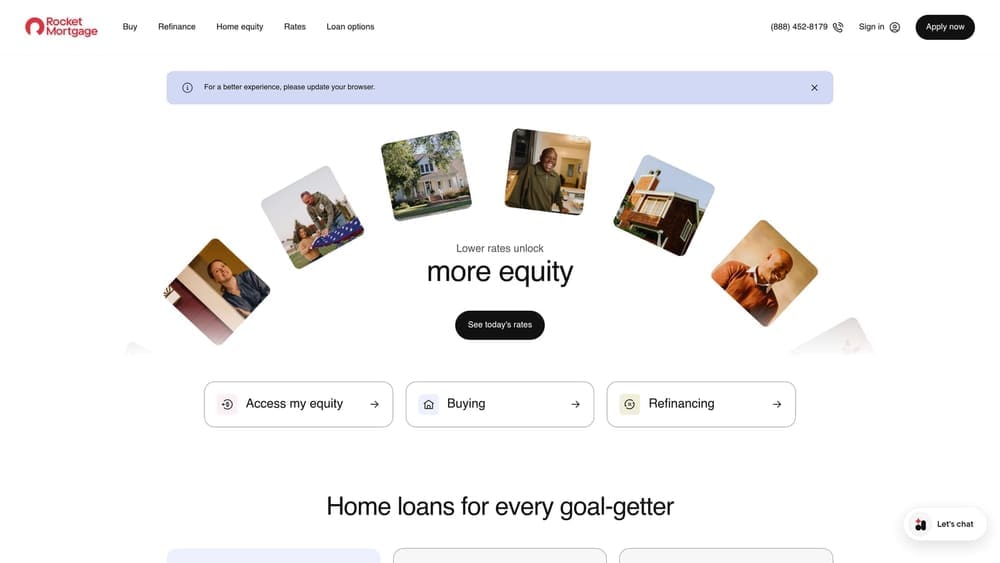
Rocket Mortgage runs a hard pull for pre-approval. Movement Mortgage follows the same standard process. Most banks require a hard pull before they’ll give you any meaningful information about your options. For a borrower already near a program threshold, that inquiry can be the difference between qualifying and not qualifying.
The NoTouch Credit Pull process at FreePreQuals.com works differently. It uses a soft pull only — zero credit score impact, zero cost. You get a real pre-qualification letter that you can present to sellers and real estate agents without ever triggering a hard inquiry on your credit report.
Here’s how the process compares:
| Feature | Duane / NoTouch Credit Pull | Typical National Lender | Typical Bank |
|---|---|---|---|
| Credit pull type | Soft pull only | Hard pull | Hard pull |
| Score impact | Zero | 5–10 points (per CFPB) | 5–10 points (per CFPB) |
| Cost to pre-qualify | Free | Varies | Varies |
| Time to pre-qual letter | Fast, manual review | Automated, varies | Branch-dependent |
| FICO floor | Program-dependent, no overlay inflation | Often 620+ overlay | Often 620–640+ overlay |
| Lender access | 500+ wholesale lenders | Single lender | Single bank product |
The overlay issue in that last row matters more than most borrowers realize. A national lender or bank may tell you they require a 620 FICO minimum when the FHA program floor is actually 500 or 580. That’s not a program requirement — it’s an internal policy. A mortgage broker with access to multiple wholesale lenders can find the investor whose overlay actually fits your profile.
To start your no-cost, no-hard-pull pre-qualification, visit FreePreQuals.com or call 804-212-8663. Submit your basic information and Duane Buziak reviews your profile manually — no automated rejection engine, no hard pull, no obligation. You can also learn more about how the process works at does prequalification affect your credit score.
Success indicator: You receive a pre-qualification letter with your loan amount and program confirmed — and your credit score is exactly where it was when you started.
Step 5: Understand What Your Pre-Qual Letter Actually Means
Getting your pre-qualification letter is a significant milestone. But understanding exactly what it does and doesn’t mean will prevent surprises later in the process — and help you use it effectively right now.
A pre-qualification letter states the loan amount and program you appear to qualify for based on the information you’ve provided and a soft pull review of your credit profile. It is not a loan commitment. Full underwriting — the process where a lender verifies every document, appraises the property, and issues a formal approval — happens after you’re under contract on a specific home.
For bad-credit borrowers, the pre-qual letter does something especially valuable: it tells you what conditions need to be met before full approval. Maybe your DTI needs to come down slightly. Maybe you need one more month of bank statements. Maybe there’s a collection account that needs to be addressed before closing. This is actionable intelligence, not rejection. Knowing these conditions early gives you time to address them before you’re under contract with a closing deadline.
No hard inquiry mortgage pre-approval comes later in the process — after you’ve chosen a specific property and are ready to move forward. At that stage, a hard pull is standard and expected. The key is that it happens once, for a real purpose, not speculatively during your shopping phase.
Here’s how to use your pre-qual letter effectively:
With real estate agents: Present your pre-qual letter when you start working with an agent. It demonstrates you’re a serious buyer with a documented loan amount in mind — not someone browsing without financial footing.
For setting your search range: Your pre-qual letter gives you a real ceiling. Shopping at or below that number keeps your offers credible and your stress manageable.
Watch the expiration date: Pre-qualification letters typically expire in 60 to 90 days. If your home search extends beyond that window, you’ll need to refresh your pre-qual. With the NoTouch Credit Pull process, that refresh still doesn’t require a hard inquiry.
You can also review the full breakdown of how these two stages differ at mortgage pre-qualification vs. pre-approval: what’s the difference in 2026.
Success indicator: You understand the distinction between pre-qualification and pre-approval, you know what conditions (if any) your letter identifies, and you’re ready to start your home search with a clear price range.
Step 6: Protect and Improve Your Score While You Shop
Getting your pre-qualification letter is not the finish line — it’s the starting gun for your home search. And during that search, your credit score needs to stay stable. For bad-credit borrowers, the margin between qualifying and not qualifying is thin enough that a few points in either direction can matter significantly.
Here’s what to do and what to avoid from the moment you receive your pre-qual letter until you’re under contract.
Do not open new credit accounts. Applying for a new credit card, auto loan, or any other credit line adds a hard inquiry and reduces the average age of your accounts. Both factors can lower your score. Even if a store card is offering a compelling promotion, this is not the time.
Pay down revolving balances where possible. Credit utilization — how much of your available revolving credit you’re using — is one of the most impactful factors in your score. Getting utilization below 30% across your credit cards can move your score meaningfully in a short period. If you’re at 60% utilization on a card with a $5,000 limit, paying it down to $1,500 can help more than almost anything else you do in the short term.
Do not close old accounts. It seems counterintuitive, but closing a credit card you’re not using can hurt your score by shortening your average credit history and reducing your total available credit. Leave old accounts open, even if you’re not actively using them.
Dispute errors now, not later. If you flagged errors in Step 1, the dispute process takes time — typically 30 days per round. Starting early means corrections can be reflected in your score before your full underwriting review.
Mortgage pre-approval without hard pull during the shopping phase is exactly what the NoTouch Credit Pull process is designed for. You can explore your options, get educated, adjust your profile, and even refresh your pre-qual letter — all without the clock running on credit damage.
One more thing worth knowing: if you eventually need to apply with multiple lenders for final loan pricing, FICO treats multiple mortgage-related hard inquiries within a 14 to 45-day window as a single inquiry. Plan your final comparison shopping to happen within that window so you’re not penalized for doing your due diligence.
Success indicator: Your credit score at the end of your home search is the same as — or higher than — it was when you started. That’s the goal, and it’s achievable with intentional credit behavior during the process.
Your Bad-Credit Pre-Qual Checklist and Next Steps
Here’s your complete action sequence, consolidated into a checklist you can work through in order:
1. Pull your own credit report at AnnualCreditReport.com — no score impact, free, federally authorized.
2. Identify your three FICO scores and determine your middle score — that’s your qualifying score for mortgage purposes.
3. Match your middle score to the right loan program using the breakdown in Step 2 — FHA, VA, USDA, Conventional, or Non-QM.
4. Gather your income, asset, and employment documents before you apply — W-2s, pay stubs, bank statements, and any explanation letters for gaps.
5. Start your no credit impact mortgage pre-qual at FreePreQuals.com — free, soft pull only, manual review by Duane Buziak, no automated rejection.
6. Receive your pre-qualification letter and review any conditions it identifies — treat those conditions as your pre-closing to-do list.
7. Protect your score during your home search using the credit hygiene steps in Step 6 — no new accounts, pay down utilization, don’t close old cards.
If your score is below the minimum for your target program today, that doesn’t mean homeownership is off the table. Many borrowers are closer than they think, and a clear credit improvement timeline — sometimes as short as 60 to 90 days — can move the needle enough to qualify. Duane Buziak can review your profile and give you a realistic roadmap, not a vague “come back later.”
To get started, get your free mortgage prequalification today at FreePreQuals.com or call 804-212-8663. No hard pull. No cost. No obligation. You can also explore whether you can get pre-qualified for a mortgage with bad credit in 2026 and review your FHA loan options and Non-QM loan programs for borrowers outside standard guidelines.
Frequently Asked Questions: Getting Prequalified with Bad Credit
Can I get prequalified for a home loan with a 500 credit score?
Yes. FHA loans allow a minimum FICO score of 500 with a 10% down payment. At 580 FICO, the required down payment drops to 3.5%. These are HUD-established program floors. Some lenders impose higher “overlay” requirements, which is why working with a mortgage broker who has access to multiple wholesale lenders gives you more options than going directly to a single bank or national lender.
Does getting prequalified hurt my credit score?
It depends entirely on the method. The standard industry practice uses a hard pull, which the CFPB confirms can lower your score by up to 5 points or more per inquiry. The NoTouch Credit Pull process at FreePreQuals.com uses a soft pull only — zero credit score impact. You receive a real pre-qualification letter without any change to your credit score.
What is the minimum credit score for an FHA loan in 2026?
The FHA program minimum is 500 FICO with 10% down, or 580 FICO with 3.5% down. Individual lenders may set higher internal minimums called overlays. FHA loan requirements are established by HUD and apply to FHA-approved lenders nationwide.
What is a NoTouch Credit Pull and how does it work?
The NoTouch Credit Pull is the proprietary pre-qualification process used at FreePreQuals.com. Instead of running a hard inquiry that damages your credit score, Duane Buziak reviews your credit profile using a soft pull — the same type of inquiry that occurs when you check your own credit. The result is a real pre-qualification letter, issued without any impact to your score. It’s free, and there’s no obligation to proceed.
How is pre-qualification different from pre-approval for bad credit borrowers?
Pre-qualification is an assessment of what you likely qualify for based on stated information and a soft pull credit review. It’s the starting point — it opens doors with agents and sellers and tells you your price range. Pre-approval is a deeper verification process that typically occurs after you’ve chosen a property, involves full document review, and usually includes a hard pull. For bad-credit borrowers, understanding this distinction is especially important because it means you can explore your options and get a real letter without triggering the hard pull that comes with full pre-approval.
Can I get a mortgage with collections on my credit report?
Potentially yes, depending on the loan program and the nature of the collections. FHA guidelines allow for some collections to remain open without mandatory payoff, though lender overlays vary. Medical collections are often treated differently than consumer debt collections. The best approach is to have your specific situation reviewed directly — Duane Buziak can assess your profile through the NoTouch Credit Pull process and tell you exactly where you stand without adding a hard inquiry to your report.
How long does it take to get a pre-qualification letter with bad credit?
Through FreePreQuals.com, the process is designed to be fast. Submit your basic information, and Duane Buziak reviews your profile manually — no automated system that rejects you before a human looks at your file. The manual review approach is especially valuable for bad-credit borrowers whose profiles may not fit a standard automated underwriting model. Timing varies based on the completeness of the information you provide, but the goal is to get you a real answer quickly.
What if my score is too low to qualify right now — what are my options?
A score that’s below the current program minimum isn’t a permanent condition. Many borrowers are closer to qualifying than they realize, and a targeted credit improvement plan — paying down specific balances, disputing errors, or simply letting recent negative items age — can move scores meaningfully within 60 to 90 days. Duane Buziak can review your current profile and give you a realistic timeline and action plan rather than a vague dismissal. The NoTouch Credit Pull process means that review costs you nothing — not even a credit score point.
The Bottom Line
Getting prequalified for a home loan with bad credit is not about finding a lender willing to overlook your score. It’s about understanding which programs fit your profile, positioning your financial documentation to show your full qualifying strength, and starting the process in a way that doesn’t make your credit situation worse before it gets better.
The standard industry approach — running a hard pull just to tell you what you might qualify for — is a structural disadvantage for borrowers who can least afford it. The NoTouch Credit Pull process exists specifically to remove that barrier.
Duane Buziak, named Virginia Broker of the Year 2024–2025 and ranked by Scotsman Guide as a Top Originator in both 2025 (#114, $44.4M) and 2026 ($51.2M), has helped thousands of borrowers navigate exactly this situation. With access to 500+ wholesale lenders and 1,400+ five-star reviews, the difference between working with a broker and working with a single lender becomes clear quickly.
Your next step is simple: get your free mortgage prequalification today at FreePreQuals.com. No hard pull. No cost. No obligation. Or call directly at 804-212-8663.
Legal Disclaimer: This article is for informational purposes only and does not constitute a commitment to lend or a guarantee of loan approval. Loan program availability, credit score requirements, and interest rates are subject to change and vary based on individual borrower qualifications, property type, and market conditions. All loans are subject to underwriting approval. Duane Buziak, NMLS #1110647, is a licensed mortgage broker with Coast2Coast Mortgage LLC, NMLS #376205. Licensed to originate mortgage loans in Virginia, Florida, Tennessee, Georgia, and Washington D.C. This is not an advertisement for credit as defined by Regulation Z. Equal Housing Opportunity.
Duane Buziak, NMLS #1110647
Mortgage Maestro | Coast2Coast Mortgage LLC, NMLS #376205
Phone: 804-212-8663
Licensed in: Virginia, Florida, Tennessee, Georgia, Washington D.C.
Virginia Broker of the Year 2024–2025 | Scotsman Guide Top Originator 2025 (#114, $44.4M) and 2026 ($51.2M)
1,400+ Five-Star Reviews
FreePreQuals.com