
Updated July 2026 — Licensed in VA, FL, TN, GA. Most homebuyers assume the fastest path to a prequalification letter runs straight through their bank. Walk in, hand over your Social Security number, and walk out with a number. Simple — except for one problem: that process almost always triggers a hard credit inquiry, and that inquiry costs you points before you’ve ever made an offer on a home.
The mortgage broker vs. bank prequalification debate isn’t just about rates or paperwork. It’s about who pulls your credit, when they pull it, and what that pull does to your buying power. A soft pull mortgage pre-qualification through a broker gives you your full picture — loan types, rate ranges, lender options — without touching your credit score. A bank can only show you their own products, and most run a hard pull to do even that. The NoTouch Credit Pull at FreePreQuals.com is a no hard inquiry mortgage pre-approval process that protects your FICO score at every step of the homebuying journey.
To illustrate the real cost: a borrower whose credit score drops from 680 to 670 due to a bank’s hard pull could face a higher rate tier on a $350,000 conventional loan. At a 0.25% rate difference — a common tier penalty — that’s roughly $50 more per month, or approximately $18,000 in additional interest over a 30-year term. That’s the dollar cost of skipping a no credit impact mortgage pre-qual. The NoTouch Credit Pull eliminates that risk entirely during prequalification. FreePreQuals.com offers this mortgage pre-approval without hard pull as a completely free service to homebuyers in Virginia (VA), Florida (FL), Tennessee (TN), and Georgia (GA).
This guide breaks down seven strategies to help you navigate the broker vs. bank prequalification decision intelligently using a soft pull pre-qualification. Each strategy is designed to protect your credit, expand your loan options, and position you as a stronger buyer — whether you’re purchasing your first home or your fifth. Ready to get started? The NoTouch Credit Pull is available now at no cost and with zero credit score impact.
Duane Buziak, NMLS #1110647 | Coast2Coast Mortgage LLC, NMLS #376205
Legal Disclaimer: This content is for informational purposes only and does not constitute a commitment to lend or an offer of credit. All loan programs are subject to credit approval, income verification, and property eligibility. Rates, terms, and program availability are subject to change without notice. Dollar figures shown are illustrative examples only and do not represent a guarantee of savings or rate. FreePreQuals.com is operated by Coast2Coast Mortgage LLC, NMLS #376205, licensed in Virginia, Florida, Tennessee, and Georgia. NMLS Consumer Access: nmlsconsumeraccess.org. Equal Housing Opportunity.
1. Start With a Soft Pull, Not a Bank Application
The Challenge It Solves
The moment you walk into a retail bank and ask about getting prequalified, most institutions will request your Social Security number and run a hard credit inquiry. This happens before you’ve compared a single rate, reviewed a single loan program, or decided whether that bank is even the right fit for your situation. You’ve given up credit score points just to start a conversation.
The Strategy Explained
The NoTouch Credit Pull is a soft-pull process that retrieves your credit profile without generating a hard inquiry. According to the Consumer Financial Protection Bureau, hard inquiries can reduce your credit score by up to 5–10 points and remain on your credit report for two years. A soft pull, by contrast, does not affect your score and is not visible to other lenders reviewing your file.
A soft pull mortgage pre-qualification through a broker like Duane Buziak gives you a real picture of your loan eligibility, estimated rate range, and program options — all before you’ve committed to a single lender or authorized a single hard pull. This is the foundational difference between starting the homebuying process strategically and starting it blind.
Implementation Steps
1. Visit FreePreQuals.com and submit your prequalification request — no Social Security authorization for a hard pull required at this stage.
2. Review the results of your NoTouch Credit Pull, which will show your current credit profile, estimated qualifying range, and loan program options.
3. Use that information to make an informed decision about which lender and loan type to pursue before authorizing any hard inquiry.
Pro Tips
Never authorize a hard pull with any lender until you’ve completed a soft pull pre-qualification first. The information you gain from the NoTouch Credit Pull process costs you nothing — not a dollar, not a single credit score point. That baseline is your most valuable asset in any lender conversation that follows.
2. Understand What a Broker Can Access That a Bank Cannot
The Challenge It Solves
When you walk into a bank for prequalification, you’re essentially walking into one store and asking what they sell. That bank’s loan officer can only offer the products on their institution’s shelf. If their programs don’t fit your profile — your income structure, your credit tier, your loan size — there’s no flexibility. You either fit their box or you don’t.
The Strategy Explained
A mortgage broker operates in the wholesale market, which means access to hundreds of lenders and their corresponding loan programs through a single relationship. Duane Buziak at Coast2Coast Mortgage LLC works with more than 500 wholesale lenders, giving borrowers access to programs that most retail banks and even many large national lenders simply cannot offer.
This structural difference is especially significant for borrowers with non-standard profiles: self-employed individuals with complex income documentation, veterans using VA benefits, buyers in high-cost markets approaching jumbo territory, or borrowers who’ve received a prior denial from a single institution. A no hard inquiry mortgage pre-approval through a broker doesn’t just protect your credit — it opens the door to a far wider range of qualifying options than any single bank can provide.
Implementation Steps
1. Before approaching any lender, ask directly: “How many lenders do you have access to?” A bank will answer one. A broker should be able to answer with a specific wholesale network count.
2. Ask which loan programs they can access for your specific profile — FHA, VA, USDA, conventional, and jumbo — and whether any require a hard pull just to check eligibility.
3. Compare the scope of what a broker can show you via soft pull against what a bank requires a hard pull to even begin discussing.
Pro Tips
The value of wholesale lender access isn’t just about having more options. It’s about having competitive options. When multiple lenders are competing for your loan, pricing pressure works in your favor. A bank has no incentive to compete with itself.
3. Map Your Credit Score to Real Loan Costs Before Applying Anywhere
The Challenge It Solves
Most borrowers think of a hard inquiry as a minor inconvenience — a few points off a score that will bounce back eventually. What they don’t account for is the dollar cost of that score drop if it pushes them into a higher rate tier at the exact moment they’re locking a loan.
The Strategy Explained
Lenders use FICO score tiers to price mortgage loans. The pricing isn’t a smooth curve — it moves in brackets. A borrower at 680 qualifies for a different rate than a borrower at 670, even though the difference is just ten points. To illustrate: imagine a borrower whose score drops from 680 to 670 as the result of a hard inquiry from a bank prequalification. That single tier shift could place them in a higher rate bracket on a $350,000 conventional loan, potentially adding hundreds of dollars per year in interest over the life of the loan. Across a 30-year term, that difference compounds into a meaningful sum — real money lost to a process that didn’t have to involve a hard pull at all.
This is why mortgage pre-approval without hard pull isn’t just a convenience feature. It’s a financial protection strategy. Preserving your credit score going into the rate-lock conversation keeps you in the strongest possible pricing tier.
Implementation Steps
1. Complete a NoTouch Credit Pull soft pull pre-qualification to establish your current score baseline without any impact.
2. Ask your broker to walk you through the rate tier structure for your target loan type and loan amount, so you understand exactly where your score sits and what a tier drop would cost you.
3. Avoid authorizing any hard pull until you’ve identified the specific lender and loan program you intend to move forward with — not just to shop.
Pro Tips
The CFPB confirms that hard inquiries stay on your credit report for two years. Even if your score recovers, that inquiry is visible to every lender who reviews your file during that window. Protect the score you have.
4. Use the Comparison Table Framework to Evaluate Any Prequalification Source
The Challenge It Solves
Borrowers often compare lenders based on advertised rates or brand recognition. What they rarely compare is the process itself — specifically, what happens to their credit before a single rate is quoted. Knowing the right questions to ask before authorizing any pull is the difference between a strategic application and an uninformed one.
The Strategy Explained
Before you engage any prequalification source, run them through a structured comparison. The table below shows how the NoTouch Credit Pull process at FreePreQuals.com compares to what borrowers typically encounter at a national lender or a retail bank.
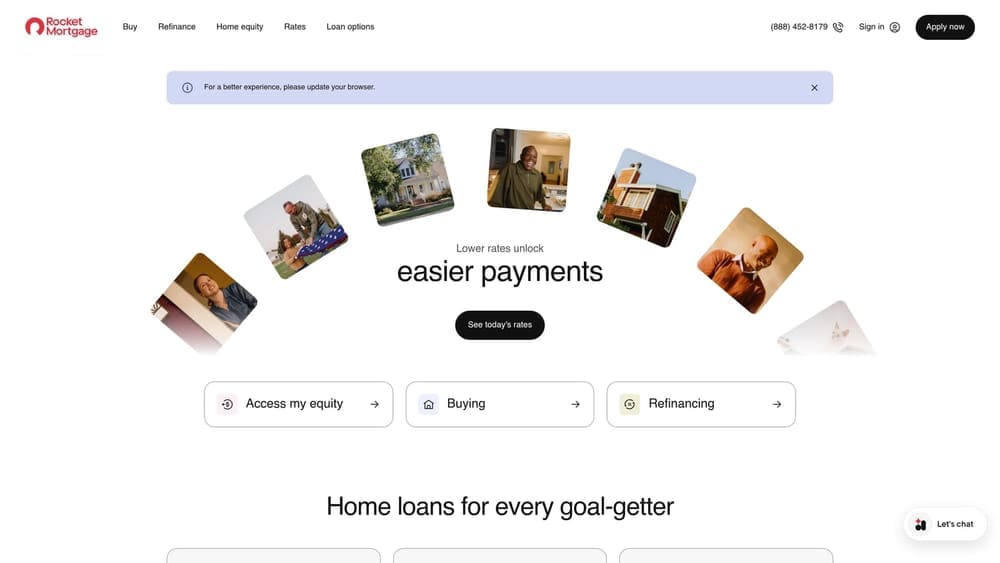
| Feature | Duane Buziak / NoTouch Credit Pull | Typical National Lender (e.g., Rocket) | Typical Retail Bank |
|---|---|---|---|
| Credit Pull Type | Soft pull only at pre-qual stage | Hard pull required for preapproval | Hard pull at or before prequalification |
| Score Impact | Zero — no credit score impact | Up to 5–10 points per CFPB | Up to 5–10 points per CFPB |
| Lender Access | 500+ wholesale lenders | Single institution only | Single institution only |
| Loan Programs Available | FHA, VA, USDA, Conventional, Jumbo | Limited to their own product shelf | Limited to their own product shelf |
| FICO Floor Flexibility | Access to lenders with varied minimums | Defined by single institution policy | Defined by single institution policy |
| Time to Pre-Qual Letter | Fast — soft pull is immediate | Varies — requires hard pull first | Varies — requires hard pull first |
| Cost to Borrower | Free | Varies by institution | Varies by institution |
Implementation Steps
1. Before engaging any lender, ask: “Is the prequalification process a soft pull or a hard pull?” If they can’t answer clearly, assume it’s a hard pull.
2. Ask how many loan programs they can access and whether they’re limited to their own institution’s products.
3. Compare the results of this framework across any lender you’re considering before authorizing anything.
Pro Tips
The question “Is this a soft pull or a hard pull?” is one of the most important questions a borrower can ask — and most borrowers never ask it. Make it the first question in every lender conversation.
5. Match Your Loan Type to the Right Prequalification Channel
The Challenge It Solves
Not every borrower fits a conventional loan profile, and not every lender can serve every loan type. When a borrower with a VA entitlement or self-employment income walks into a retail bank, they may be steered toward a product that fits the bank’s shelf rather than the borrower’s actual best option. This mismatch costs borrowers money and sometimes results in unnecessary denials.
The Strategy Explained
Different loan types have different eligibility structures, and the right prequalification channel depends on which program best fits your profile. Here’s how the major loan types map to the broker advantage:
FHA Loans: Designed for borrowers with lower credit scores or smaller down payments. A broker with wholesale access can identify FHA lenders with more flexible overlays than a single bank’s in-house FHA program.
VA Loans: Available to eligible veterans and service members. VA loans allow cash-out refinancing up to 100% LTV — a feature that most retail banks won’t fully optimize for. A broker who specializes in VA programs can access lenders who work within VA guidelines rather than layering restrictive bank overlays on top.
USDA Loans: Available for eligible rural and suburban properties. These programs are often unavailable at major retail banks entirely, making a broker the primary access point for many USDA-eligible borrowers.
Conventional Loans: The 2026 conforming loan limit is $806,500 for standard areas and $1,249,125 for high-cost areas. Conventional cash-out refinancing is capped at 90% LTV. A broker can compare conventional pricing across dozens of wholesale lenders simultaneously, which a bank cannot.
Jumbo Loans: For loan amounts exceeding conforming limits, jumbo guidelines vary significantly by lender. Wholesale access to multiple jumbo investors gives a broker a decisive advantage over any single bank’s jumbo product.
In Virginia and other licensed states where Duane operates — FL, TN, GA, and DC — homebuyers face competitive markets where credit score positioning matters. The CFPB’s Owning a Home resource provides neutral guidance on loan types and the homebuying process for borrowers in any market.
Implementation Steps
1. Identify your borrower profile: conventional W-2, self-employed, veteran, first-time buyer, or prior denial. This determines which loan types you’re eligible for.
2. Complete a mortgage pre-approval without hard pull through FreePreQuals.com to see which loan programs your profile qualifies for across the full wholesale network.
3. Compare the terms available across loan types before committing to a single program or lender.
Pro Tips
Self-employed borrowers and veterans are two of the most underserved profiles in single-bank prequalification. If you fall into either category, the broker channel isn’t just preferable — it’s often the only path to finding the right program at the right price.
6. Protect Your Credit During the Rate-Shopping Window
The Challenge It Solves
Many borrowers have heard that shopping multiple lenders won’t hurt their credit because multiple mortgage inquiries “count as one.” This is partially true — and the partial truth is where borrowers get burned. Understanding exactly what the shopping window does and doesn’t protect is essential before you start submitting applications.
The Strategy Explained
The CFPB acknowledges that credit scoring models often treat multiple mortgage-related hard inquiries within a defined window — typically 14 to 45 days depending on the scoring model in use — as a single inquiry for scoring purposes. This means the score impact of shopping multiple lenders in a short period may be reduced compared to spreading those applications out over months.
However, there is a critical nuance that most borrowers miss: all of those inquiries still appear on your credit report. They are visible to every lender who reviews your file, regardless of how the scoring model treats them. A lender reviewing your application and seeing five hard inquiries in the past 30 days may draw conclusions about your financial behavior — even if your score hasn’t dropped by five separate amounts.
This is where the no credit impact mortgage pre-qual model eliminates the problem entirely. One NoTouch Credit Pull. One soft pull mortgage pre-qualification. Multiple lender options reviewed simultaneously through a broker’s wholesale network — without a single hard inquiry appearing on your report. You get the benefit of broad market comparison without the visible inquiry trail that the shopping window only partially addresses.
Implementation Steps
1. Before shopping any lenders directly, complete a soft pull pre-qualification through FreePreQuals.com to establish your baseline and see your options.
2. If you do proceed to hard-pull applications with multiple lenders, concentrate them within the tightest possible window — ideally 14 days — to maximize the likelihood that scoring models treat them as a single inquiry.
3. Monitor your credit report after any hard pull activity to confirm the inquiry count and understand what lenders will see when they review your file.
Pro Tips
The shopping window is a useful protection, but it’s a fallback — not a strategy. The real strategy is to avoid unnecessary hard pulls entirely by using the NoTouch Credit Pull process to identify your best lender option before authorizing any hard inquiry at all.
7. Know When to Transition From Prequalification to Preapproval — and With Whom
The Challenge It Solves
Prequalification and preapproval are not the same thing, and confusing them can lead borrowers to authorize a hard pull prematurely. Many banks blur this distinction — either intentionally or through process design — moving borrowers straight to a hard-pull preapproval before they’ve had a chance to compare their options.
The Strategy Explained
A prequalification — especially one completed through the NoTouch Credit Pull process — is a soft-pull assessment of your creditworthiness and loan eligibility. It gives you a real picture of what you can qualify for, which loan types are available to you, and what rate tiers you’re likely to fall into. It does not require a hard inquiry, and it does not commit you to any lender.
A preapproval is a more formal step that involves a hard credit pull, full income and asset verification, and a lender commitment to a specific loan amount. This is the document that carries weight with sellers in a competitive market. The strategic question isn’t whether to get preapproved — it’s when and with whom.
Starting with a soft pull pre-qualification gives you maximum information and negotiating clarity before you make that commitment. You’ve already seen your options across the wholesale network. You know which loan type fits your profile. You know which lender offers the best terms for your specific situation. When you authorize that hard pull for preapproval, you’re doing it with intention — not as the first step in a process you haven’t yet understood.
This sequencing is the entire strategic advantage of the broker model. You arrive at preapproval informed, credit-protected, and positioned to move quickly once you find the right property.
Implementation Steps
1. Complete your NoTouch Credit Pull soft pull pre-qualification first. This is your information-gathering phase — no credit impact, no commitment.
2. Use the results to select your loan type, target lender, and rate tier. Discuss the full picture with Duane Buziak before authorizing anything further.
3. When you’re ready to make offers on homes, authorize the hard pull for formal preapproval with the specific lender you’ve already identified through the soft pull process. You’re not shopping at that point — you’re executing.
Pro Tips
In competitive markets across Virginia, Florida, Tennessee, Georgia, and DC, sellers and their agents look at the quality of a preapproval letter — not just its existence. A preapproval letter backed by full underwriting review from a broker with wholesale lender access carries real credibility. Get your soft pull pre-qual done now so you’re ready to move to preapproval the moment you need it.
Putting It All Together: Your Implementation Roadmap
The mortgage broker vs. bank prequalification decision comes down to one foundational question: do you want to see your options before your credit takes a hit, or after? Banks are built to sell their own products, and most require a hard pull just to start the conversation. A broker with a soft-pull process lets you explore your full landscape — loan types, rate tiers, lender options — without the score impact.
The seven strategies in this guide follow a logical sequence. Start with a soft pull. Understand the structural advantage of wholesale access. Know what your credit score is worth in real dollars before you let anyone touch it. Use the comparison framework to evaluate every lender you consider. Match your loan type to the right channel. Protect your credit during the shopping window. And when it’s time to move to preapproval, do it with intention — not as a reflex.
The smartest move any homebuyer can make is to start with a no credit impact mortgage pre-qual, establish a clear baseline, and then make an informed decision about where to apply.
If you’re ready to see what you qualify for without any credit score risk, get your free mortgage prequalification today through the NoTouch Credit Pull process. No hard inquiry. No score impact. No obligation. Call 804-212-8663 or visit FreePreQuals.com to get started.