
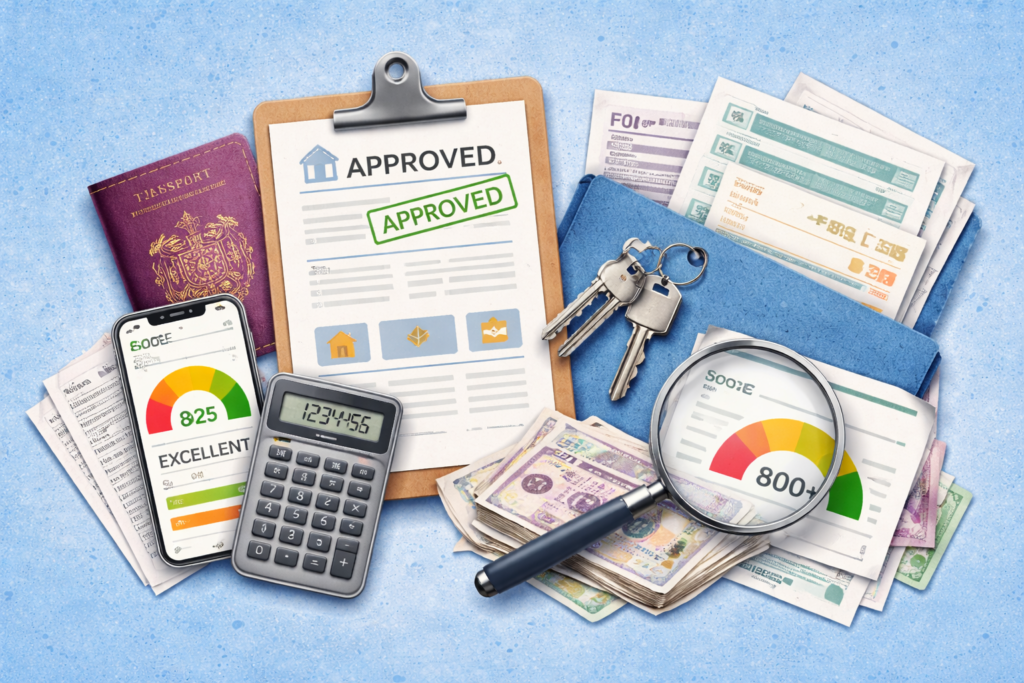
A $350,000 FHA loan at 6.50% for 30 years has a principal-and-interest payment of $2,212.24 per month. At 6.75%, that same $350,000 loan costs $2,270.32 per month – a difference of $58.08 monthly and $3,484.80 over the first five years. That is why rate shopping matters. But your first question should not be whether rate shopping hurts your score. It should be whether a soft pull versus credit inquiry is being explained honestly before anyone accesses your credit.
A NoTouch Credit Pull lets you find out exactly what you may qualify for without a single point coming off your credit score. It gives a mortgage broker enough visibility to discuss likely loan paths, payment targets, credit concerns, and buying power before you decide whether to move forward. That is very different from authorizing a traditional credit inquiry tied to a formal mortgage file.
Duane Buziak, NMLS #1110647 | Coast2Coast Mortgage LLC, NMLS #376205
Table of Contents
- What a soft pull actually checks
- Soft pull versus credit inquiry for mortgage shoppers
- Pre-qualification and pre-approval are not the same
- Credit, debt, and loan-program benchmarks
- When a formal credit inquiry makes sense
- Eight common questions
What a soft pull actually checks
A soft credit pull is a credit-screening method that does not affect your credit score. Your NoTouch Credit Pull can reveal the information needed for an early mortgage conversation: reported accounts, balances, payment patterns, public-record information where applicable, and an estimated score profile. It is designed to answer the question buyers care about first: “What can I realistically afford and qualify for before I risk credit damage?”
A soft pull mortgage broker uses this step to give you a practical starting point, not a vague online estimate based only on income and a guessed credit score. That matters if you are close to an FHA score threshold, carrying revolving balances, using down payment assistance, or comparing a conventional loan with an FHA loan.
A traditional credit inquiry is different because it is generally used when you authorize a more formal credit review. That inquiry can appear on your credit report and may affect your score. The impact varies by credit profile, timing, and the number of recent inquiries, but buyers should never have to guess which type of access they are authorizing.
Soft pull versus credit inquiry: the comparison that protects buyers
The phrase “credit inquiry” is often used too broadly. A soft pull is technically a type of inquiry, but it is not the score-affecting inquiry most buyers fear. Ask one direct question before you provide your Social Security number: “Is this a NoTouch Credit Pull, or will it create a score-affecting inquiry?”
| Decision point | Broker soft-pull pre-qualification | Traditional broker or bank pre-approval |
|---|---|---|
| Credit impact | No score impact from a NoTouch Credit Pull | May create a score-affecting credit inquiry |
| Timeline | Early buying-power review, often within 24 hours | More documentation and formal review |
| Mortgage options reviewed | Access to 500+ wholesale mortgage options through a broker | May be limited to one institution’s product shelf |
| FICO floor flexibility | Can identify FHA paths from 500 FICO and VA options from 500 FICO | Institution overlays may require a higher score |
| Best use | Before house hunting, payment planning, and rate shopping | When you are ready for a property-specific offer strategy |
The comparison is not meant to suggest that a formal pre-approval is bad. It serves a different purpose. A pre-qualification is an initial assessment of likely eligibility based on information supplied by the buyer and an early credit review. A pre-approval is a deeper review that usually requires documentation such as income, assets, and employment records, and it can carry more weight when you submit an offer.
The smart sequence is usually simple: start with a no credit hit mortgage application, understand the numbers, then authorize the next step only when it supports your offer plan. Do not let someone rush you into a formal inquiry just to answer the basic question of whether buying is realistic.
Your likely mortgage lane is more than one score
Credit matters, but it is not the only approval factor. For owner-occupied purchases, FHA remains the primary volume lane for many first-time buyers. FHA allows a 580 FICO score with 3.5% down and a 500 FICO score with 10% down, subject to underwriting approval. The 2025 standard FHA conforming loan limit is $524,225 for a one-unit property in most counties, including the standard limit used across much of the Richmond metro area.
VA financing can be especially powerful for eligible veterans and service members. Full-entitlement VA borrowers have no county loan ceiling, and eligible borrowers can finance with zero down. FreePreQuals.com reviews VA options down to 500 FICO and VA cash-out refinancing up to 100% loan-to-value, subject to qualification. VA underwriting uses a 41% debt-to-income benchmark, but residual income and the full credit profile matter.
For conventional financing, a 620 FICO score is a common minimum starting point. Conventional underwriting commonly looks for a 45% debt-to-income ceiling, though automated findings can differ based on credit, assets, and the transaction. USDA financing generally uses a 640 FICO benchmark for streamlined automated review and is limited to eligible areas and household-income rules.
Reserve requirements are also program-specific. A standard one-unit primary-residence FHA or VA purchase generally has a 0-month reserve requirement. Conventional primary-residence loans commonly require 0 months of reserves on a one-unit property, while two- to four-unit owner-occupied conventional transactions can require 2 months. A broker should explain the actual rule that applies to your file rather than quoting a broad score range and hoping it fits later.
If your payment analysis includes title and closing costs, ask about the complete transaction cost, not only the interest rate. A preferred title company can save an additional $2,000 on average. That can matter as much as a small rate difference, particularly for buyers using Dynamo DPA or Turbo DPA for no-out-of-pocket closing options.
When a formal credit inquiry makes sense
There is a right time to move beyond mortgage pre-qualification without credit check language and into a documented pre-approval. That time is when you have identified a home, need a stronger offer position, or want a precise underwriting decision based on verified documents.
Before that point, use the soft review to clean up surprises. Maybe a credit card balance needs to be paid down. Maybe an old collection needs clarification. Maybe FHA is the better fit than conventional because the down payment and payment work better. Maybe a VA buyer has more purchasing power than expected because zero down changes the cash requirement.
A broker who starts with a NoTouch Credit Pull protects your options. Instead of being locked into the first quote you receive, you can compare financing paths with a clear picture of the payment, cash needed, score requirements, and debt-to-income calculation. That is the consumer-protective way to shop.
FAQ: Soft Pull Versus Credit Inquiry
Does a soft mortgage pull lower my credit score?
No, a soft mortgage pull does not lower your credit score because it is not a score-affecting inquiry. A NoTouch Credit Pull is intended to help assess likely buying power without adding an inquiry that affects your score.
Is a soft pull the same as a mortgage pre-approval?
No, a soft pull supports an initial pre-qualification, while a pre-approval is a more documented review of income, assets, employment, and credit. The distinction matters when you are preparing an offer.
Can I get pre-qualified without a credit hit?
Yes, you can begin with a no credit hit mortgage application using a soft credit review. That gives you a practical mortgage discussion before you decide whether to authorize a formal review.
What FICO score do I need for FHA?
FHA allows 580 FICO with 3.5% down and 500 FICO with 10% down, subject to underwriting approval. Your payment history, debt, income, and automated underwriting findings still matter.
Can a VA buyer qualify with a 500 FICO score?
Yes, eligible VA buyers may be reviewed from a 500 FICO score through this platform, subject to complete underwriting. VA eligibility, residual income, debt-to-income, and documented repayment ability remain central to the decision.
Will rate shopping create multiple score impacts?
It depends on how and when your credit is accessed, which is why you should ask before authorizing any formal inquiry. Start with a soft pull mortgage broker review so you can compare likely options before moving to the next stage.
Is a no hard inquiry mortgage pre-approval available?
A no hard inquiry mortgage pre-approval is often a search phrase, but buyers should understand that a true documented pre-approval may require a formal credit review. A soft-pull pre-qualification is the right first step when your goal is to protect your score while learning your options.
Can down payment assistance work with FHA?
Yes, qualified buyers may combine FHA financing with applicable down payment assistance programs such as Dynamo DPA or Turbo DPA. Eligibility depends on the program rules, income, credit profile, property, and underwriting approval.
You do not need to sacrifice your credit score just to learn whether homeownership is possible. Schedule your free NoTouch Credit Pull pre-qualification today – serving Virginia, Florida, Tennessee, Georgia, and Washington DC.
Duane Buziak, Mortgage Maestro | NMLS #1110647 | Coast2Coast Mortgage LLC NMLS #376205 | (804) 496-4522 | duane@coast2coastml.com | Licensed: VA, FL, TN, GA, DC | Equal Housing Lender.
This material is for educational purposes and is not a commitment to lend. Loan approval, terms, pricing, and program availability depend on credit, income, assets, property, occupancy, underwriting, and applicable guidelines. Equal Housing Lender.